Article Sidebar
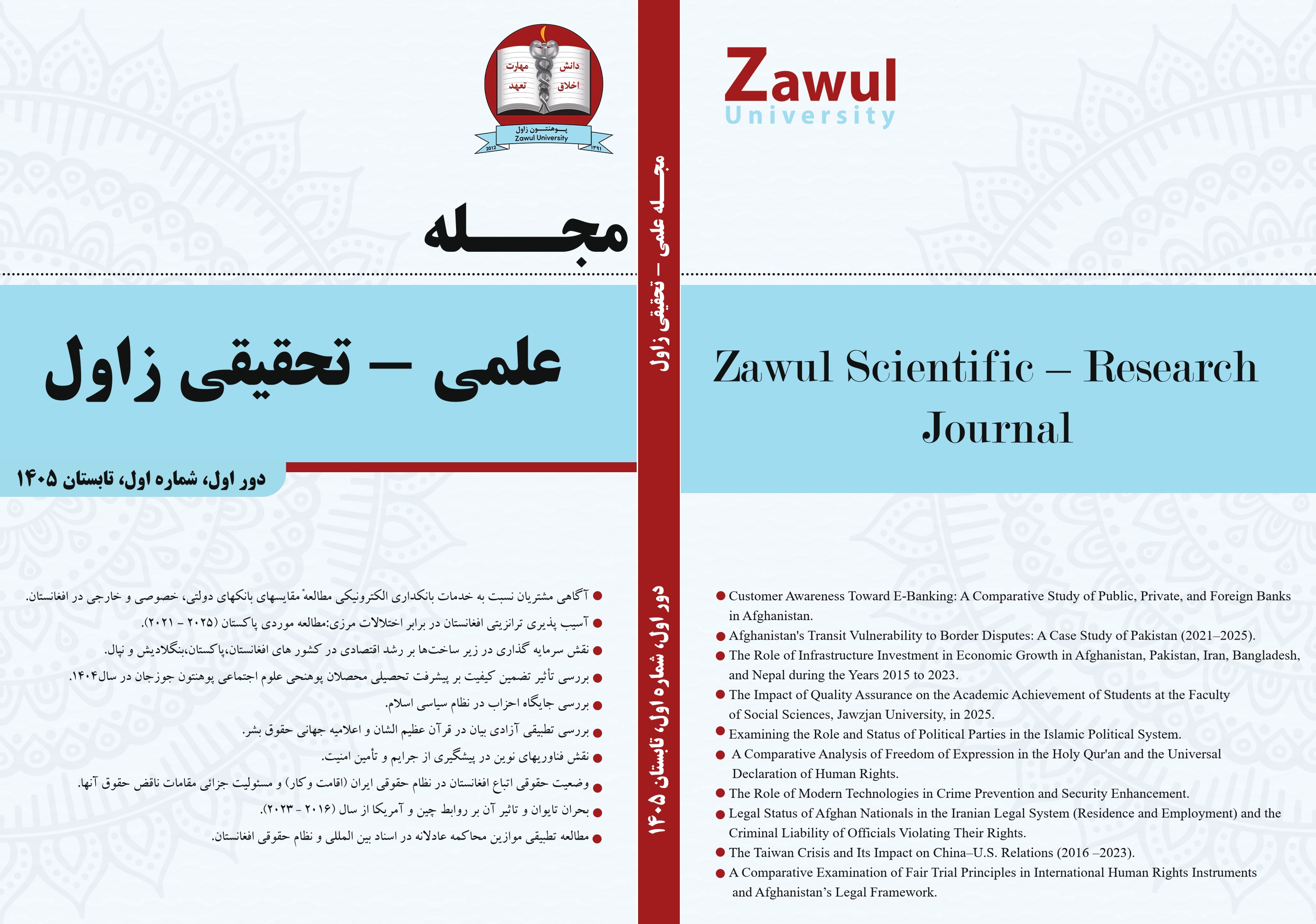
The Role of Modern Technologies in Crime Prevention and Security Enhancement
Main Article Content
Abstract
The ever-increasing development of modern information and communication technologies has made the methods of committing crimes increasingly sophisticated. In response, security, law enforcement, and judicial institutions have adopted modern technologies to combat this phenomenon. Technologies such as closed-circuit television (CCTV), biometric systems, alarm systems, global positioning systems (GPS), unmanned aerial vehicles (drones), blockchain technology, forensic photography, and artificial intelligence (AI) are now widely recognized as effective tools for enhancing security and preventing crime.The objective of this study is to examine the role of modern technologies in enhancing security and preventing crime, as well as to analyze the implications and legal consequences of their application within the criminal justice system. The primary research question addressed in this study is: What role do modern technologies play in enhancing security and preventing crime? This study employs a qualitative research methodology using a descriptive-analytical approach. The required data were collected through library-based research and subsequently analyzed using the content analysis method. The findings Indicate that modern technologies play a significant role in crime prevention, the detection and prosecution of offenders, the collection and analysis of evidence, and the enhancement of public security. Despite their numerous advantages, the widespread use of these technologies also presents significant challenges, including threats to individual privacy, excessive reliance on technology, and various ethical and legal concerns.The study concludes that the responsible and lawful use of modern technologies can make a substantial contribution to strengthening public security and reducing crime in society, provided that their application does not infringe upon individuals’ right to privacy or compromise the ethical principles underpinning criminal justice.
Keywords
Article Details
How to Cite
Similar Articles
- Mohammad Edris Hashimi, The Taiwan Crisis and Its Impact on China–U.S. Relations (2016 –2023) , Zawul Scientific Research Journal: Vol. 1 No. 1 (0): Zawul Scientific-Research Journal, Volume 1, Issue 1, Summer 1404 SH
- Karimullah Amani, Customer Awareness Toward E-Banking: A Comparative Study of Public, Private, and Foreign Banks in Afghanistan , Zawul Scientific Research Journal: Vol. 1 No. 1 (0): Zawul Scientific-Research Journal, Volume 1, Issue 1, Summer 1404 SH
- Zekrullah Oria Khail, A Comparative Examination of Fair Trial Principles in International Human Rights Instruments and Afghanistan’s Legal Framework , Zawul Scientific Research Journal: Vol. 1 No. 1 (0): Zawul Scientific-Research Journal, Volume 1, Issue 1, Summer 1404 SH
- Mohammad Ismail Ahmadi, A Comparative Analysis of Freedom of Expression in the Holy Qur'an and the Universal Declaration of Human Rights , Zawul Scientific Research Journal: Vol. 1 No. 1 (0): Zawul Scientific-Research Journal, Volume 1, Issue 1, Summer 1404 SH
You may also start an advanced similarity search for this article.